Why a Straight Bite Matters: The Medical Case for Invisalign (Beyond Cosmetics)
When most people think of orthodontics or Invisalign, they think of a purely cosmetic treatment—a luxury for achieving a “Hollywood smile.” As an expert Orthodontist at Perfect Smile Dental Clinic, I can tell you this is one of the biggest misconceptions in dentistry.
Yes, a straight smile is beautiful, but that is a bonus. The real goal of orthodontics is to fix your “bite” (occlusion).
You might be experiencing chronic headaches, jaw clicking, or bleeding gums, and you’ve never connected these issues to your crooked teeth. The truth is, why bite alignment matters has far more to do with your long-term health than your appearance.
This article will break down the critical medical reasons for Invisalign and explain why aligning your bite is a fundamental investment in your preventative health.
Table of Contents
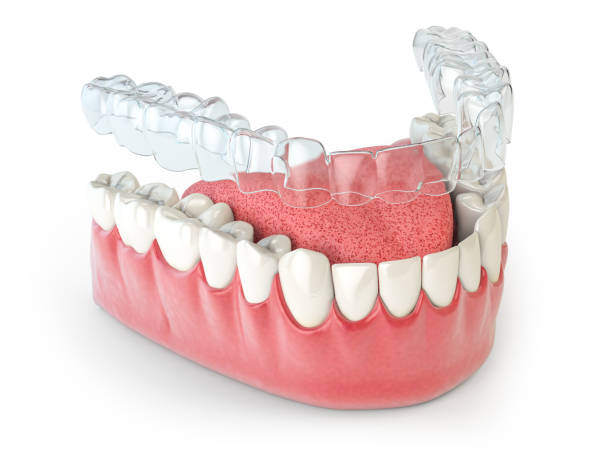
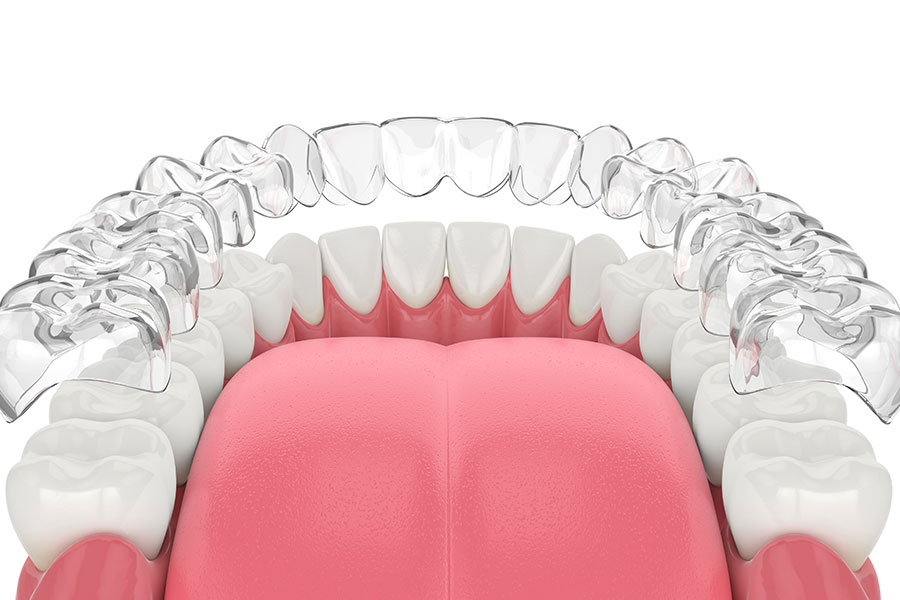
What is a 'Bad Bite' (Malocclusion)?
A “bad bite,” known clinically as malocclusion, means your upper and lower teeth don’t fit together correctly when you close your mouth.
Think of your teeth as a set of gears in a complex machine. If the gears are misaligned, they grind against each other, create friction, and put stress on the entire system, leading to wear and tear and eventual breakdown. Your jaw is that machine.
Common types of malocclusion include:
- Overbite: The upper front teeth significantly overlap the lower front teeth.
- Underbite: The lower front teeth sit in front of the upper front teeth.
- Crossbite: Some upper teeth sit inside the lower teeth.
- Crowding: Not enough space in the jaw, causing teeth to overlap and twist.
- Open Bite: The front teeth don’t meet at all when you bite down.
The Top 5 Medical Reasons for Invisalign (Beyond Aesthetics)
Ignoring a bad bite is ignoring a functional problem. Here are the top medical issues our Orthodontist, Dr. Hatice Tuçe Yeyen, treats every day at our Istanbul and Antalya clinics
1. Preventing and Relieving Jaw Pain (TMD/TMJ)
This is one of the most significant medical reasons for Invisalign. A misaligned bite creates an imbalance. Your jaw muscles must work harder, in unnatural positions, just to chew.
This constant strain puts immense pressure on your temporomandibular joint (TMJ)—the complex hinge in front of your ear. This can lead to Temporomandibular Disorder (TMD), a painful condition with symptoms like:
- Chronic headaches and migraines
- Clicking, popping, or grating sounds in the jaw
- Jaw “locking” or limited movement
- Pain in the face, neck, and shoulders
Invisalign isn’t just moving teeth; it’s re-engineering your bite to create harmony. By aligning the “gears,” we eliminate this harmful stress on the TMJ, often resolving chronic pain.
2. Drastically Reducing Your Risk of Gum Disease & Decay
Take a look at crowded, overlapping teeth. Now, try to imagine flossing between them. It’s often impossible.
These overlapping areas are “plaque traps.” Bacteria build up in these hard-to-reach spots, leading directly to:
- Cavities (Tooth Decay): Acid from bacteria eats away at your enamel.
- Gingivitis: Inflamed, bleeding gums—the first stage of gum disease.
- Periodontitis: If left untreated, this becomes a severe infection that destroys the bone supporting your teeth, leading to tooth loss.
Straight teeth are simple to clean. By correcting crowding, Invisalign is one of the most effective long-term preventative tools against gum disease and decay.
3. Stopping Abnormal Tooth Wear, Chips, and Fractures
When your “gears” don’t mesh, they grind. If your bite is off, certain teeth will hit harder and at wrong angles. This “traumatic occlusion” (a bite that causes trauma) is incredibly destructive.
Over time, this leads to:
- Attrition: Teeth slowly wearing each other down, becoming flat and short.
- Abfraction: Notches forming at the gumline as the tooth flexes under pressure.
- Cracks and Fractures: The tooth simply can’t handle the uneven force and breaks.
You could spend thousands on Dental Crowns or Composite Bonding to fix a broken tooth, but that’s just repairing the symptom. Invisalign fixes the cause.


4. Improving Chewing Function and Digestion
Your teeth are the first step in your digestive system. If you have an open bite or crossbite, you may not be able to chew your food properly.
This forces you to swallow food that isn’t broken down, putting extra strain on your stomach and digestive tract. Correcting your bite restores your ability to chew efficiently, which is the foundation of good nutrition and digestion.
5. Protecting Your Long-Term Dental Investments
This is a critical point we stress to our patients. Are you planning to get Dental Implants or Laminate Veneers?
If you place these expensive, beautiful restorations into a misaligned bite, you are setting them up to fail. The same uneven forces that destroyed your natural teeth will chip, break, or de-bond your new veneers and crowns.
For many of our full-mouth restoration cases, orthodontics with Dr. Yeyen is the first and most essential step to create a stable foundation for the work of our prosthodontists, like Prof. Dr. Müjde Sevimay.
A Note from Our Orthodontist: Dr. Hatice Tuçe Yeyen
“From an orthodontic standpoint, we analyze the occlusal planes and centric relation—this is the clinical language for how your bite functions. We aren’t just looking at the ‘social six’ front teeth. Patients often come to me for a cosmetic fix, but they also mention daily headaches. They are shocked when I explain their deep bite is a likely cause of their pain.
Another common issue I see is gum recession on a single tooth. This is often due to ‘traumatic occlusion,’ meaning that one tooth is hitting too hard and too early. Invisalign isn’t just moving teeth for looks; it’s distributing force across your entire arch to save your teeth and gums from this trauma. Our goal is a beautiful smile that is, first and foremost, healthy and functional.”
– Dr. Hatice Tuçe Yeyen, Orthodontist
Why Choose Invisalign for Your Medical Needs?
If your bite needs correcting, why Invisalign? As a certified provider, we recommend it for our adult patients for several key medical reasons:
- Superior Hygiene: Traditional braces are notoriously difficult to clean. For an adult already at risk of gum disease, this is a major problem. With Invisalign, you remove the aligners to brush and floss normally, keeping your gums healthy during treatment.
- Precision: The 3D ClinCheck software allows Dr. Yeyen to digitally map every single movement. We can see the end result and plan the most efficient path before you even start.
- Lifestyle & Speed: For our international patients, Invisalign is ideal. After your initial 3D scan and planning in our Istanbul or Antalya clinic, you can take several sets of aligners with you. Check-ups can be less frequent, often combining remote monitoring with 1-2 return visits, making it a “smart value” and time-efficient solution.
Holistic Expertise: When Invisalign Isn't the Answer
Our E-E-A-T (Expertise, Authoritativeness, Trust) commitment means being honest. Invisalign is a powerful tool, but it can’t fix everything.
- Contraindication 1: Severe Skeletal Issues. If the problem isn’t just the teeth, but a severe misalignment of the jawbones themselves.
- Alternative: Orthognathic (Jaw) Surgery. This is a combined approach where our maxillofacial surgeon, Dr. Aslı Ataseven, surgically corrects the jaw, and Dr. Yeyen then fine-tunes the tooth alignment.
- Contraindication 2: Active, Uncontrolled Gum Disease. We cannot move teeth in an infected foundation.
- Preparatory Treatment: You must first undergo Gum Treatment to get the inflammation under control.
- Contraindication 3: Patient Compliance. The aligners must be worn 22+ hours a day. If you cannot commit to this, the treatment will fail.
- Alternative: Modern fixed braces (e.g., clear ceramic braces) may be a better option for some.
Your Health is the Real Reason to Act
The answer to why bite alignment matters is simple: it is the foundation of your entire oral health.
A bad bite is a domino effect that leads to pain, infection, and tooth loss. The medical reasons for Invisalign are not a sales pitch; they are a medical diagnosis.
Choosing to correct your bite is one of the most important preventative health decisions you can make. At Perfect Smile Turkey, an ISO certified and Turkish Dental Association (TDB) member clinic, we are ready to guide you.
Explore all our dental treatments and learn more about our philosophy on our Dental Clinic Antalya.
FREQUENTLY ASKED QUESTIONS (FAQ)
The top medical reasons are 1) Correcting a bad bite (malocclusion) to prevent or relieve jaw pain (TMD/TMJ). 2) Reducing the risk of gum disease and cavities by eliminating plaque traps in crowded teeth. 3) Stopping abnormal tooth wear and fractures caused by uneven bite forces.
In many cases, yes. If your headaches and jaw clicking are symptoms of TMD (Temporomandibular Disorder) caused by a misaligned bite, then Invisalign can resolve these symptoms. By aligning your teeth, it creates a balanced, functional bite that removes the strain from your jaw joint and muscles.
Yes. A misaligned bite is not just a cosmetic issue. It can lead to serious long-term health problems, including chronic jaw pain, migraines, gum disease (periodontitis), tooth loss, and digestive issues from improper chewing
Absolutely not. Invisalign is an ideal orthodontic solution for adults. It's virtually invisible, allowing you to go through treatment without the "metal mouth" look. More importantly, it's removable, which is critical for adults who need to maintain excellent oral hygiene to prevent gum disease.

Medically Reviewed for Prosthetic Accuracy
by Prof. Dr. Müjde Sevimay (Prosthodontics Professor)
Review Date: October 11, 2025
Additional Specialist Reviews
- Surgical review by Dr. Aslı Ataseven (Maxillofacial Surgeon) on October 9, 2025
- Alignment review by Dr. Hatice Tuçe Yeyen (Orthodontist) on October 7, 2025
Written by Selman Selim Cengiz, our Content Architect with 6+ years of experience in medical editing.
Content Last Updated on February 10, 2026.