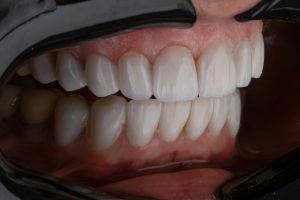
A Respectful Guide to Cosmetic Dentistry & Islam: Are Veneers or Implants Haram?
Your smile is deeply personal. It affects your confidence, your social interactions, and your overall well-being. But for many of our Muslim patients from around the world, the desire to fix a smile they are unhappy with is balanced by a profound and important question: “Is it permissible in my faith?”
This is a question we hear often in our clinics in Istanbul and Antalya. You may be searching for answers on cosmetic dentistry in Islam and wondering, “are veneers haram?” or “are dental implants haram?” You may be worried about the concept of taghyir khalqillah—changing the creation of God.
We want to address this topic with the deep respect and empathy it deserves.
A Crucial Note: We are a team of highly qualified medical professionals and prosthodontists. We are not Islamic scholars (fuqaha). This article is not a fatwa (religious ruling). It is an informational guide to help you understand the medical distinctions and the general principles discussed by scholars, so you can make an informed decision and consult your own trusted religious authority.
Table of Contents
Understanding the Islamic View on Health & Beauty
Islam places a great emphasis on both health and cleanliness. The use of the miswak (a teeth-cleaning twig) is a recommended practice (Sunnah), showing that oral hygiene is encouraged. The faith is not against beauty, but it does draw a line between presenting oneself well and acts considered to be excessive vanity or unnecessary alteration of one’s body.
The core of the issue lies in distinguishing between two different intentions:
- Restoration (Hajah – Need/Necessity): Treating a defect, disease, or injury to restore function and normal appearance.
- Beautification (Zinah – Adornment): Altering one’s healthy body purely for aesthetic enhancement or vanity.
The Key Distinction: Restorative vs. Cosmetic Dentistry
In most scholarly interpretations, restorative dentistry is not only permissible but often encouraged as a form of seeking a cure and improving one’s quality of life. The intention here is not to change God’s creation, but to repair damage done to it.
Treatments that generally fall into this permissible (halal) category include:
- Dental Implants: This is the clearest example. A Full Mouth Dental Implant procedure replaces a missing organ (a tooth). It is a medical necessity to restore function—the ability to chew properly—and to prevent bone loss and other health complications. This is overwhelmingly seen as a permissible restorative treatment.
- Dental Crowns: If a tooth is badly broken, cracked, or weakened by a Root Canal Treatment, a Zirconia Crown is a medical necessity to protect the tooth from shattering and restore its function.
- Orthodontics: Treating a severe malocclusion (bad bite) with Invisalign (Clear Aligners) is a health treatment. It prevents jaw pain (TMJ), uneven wear, and gum disease.
- Fixing a Chipped Tooth: Using Composite Bonding to repair a chip is restoring the tooth to its original, healthy state.
So, Are Veneers Haram? Analyzing the 'Grey Area'
This is the central question for many. The answer for Laminate Veneers depends entirely on the reason for getting them.
Scenario A: Veneers for a Defect ('Ayb') - Widely Considered Permissible
If veneers are used to cover a clear defect (‘ayb‘) that causes genuine distress or social hardship, scholars tend to view this as a permissible act of restoration. This is not about vanity, but about removing a source of harm.
Examples include:
- Teeth that are severely and permanently stained (e.g., from tetracycline antibiotics) and do not respond to Teeth Whitening.
- Naturally misshapen teeth (like “peg laterals”) that are a congenital defect.
- Small, uneven gaps or cracks that create an abnormal appearance.
In these cases, the veneer is “curing” a problem and restoring the smile to a normal, healthy appearance.
Scenario B: Veneers for Pure Vanity - Widely Considered Questionable
This is where the concern about cosmetic dentistry in islam is most valid. If a person has healthy, functional, and reasonably straight teeth, but seeks to aggressively shave them down (like the “Turkey Teeth” trend) to get an “ultra-white” smile purely to follow a social media trend, this is very difficult to justify as a “necessity.”
This act is driven by vanity, not need, and is the type of unnecessary alteration that the prohibitions aim to prevent.


A Note from Our Expert: The Clinical Reality of 'Cosmetic' vs. 'Restorative': A message from Dr. Müjde Sevimay - Head Dentist & Prosthodontist
“From a prosthodontist’s perspective, the line between ‘cosmetic’ and ‘restorative’ is often blurred. A missing anterior (front) tooth, for example, presents a dual deficit: functional and psychological.
Many of our Muslim patients from the UK and Europe come to us with this specific anxiety. They ask, ‘Doctor, I hate my smile, but I fear God. Is this wrong?’ My role as a doctor is to identify the medical or functional need. Severe staining is a form of dental defect. A malocclusion (bad bite) can cause jaw pain (TMD). A missing tooth, as we see in dental implant cases, leads to bone atrophy (bone loss). We are restoring health and function, and the beautiful, confident smile is a result of that restored health.”
Even if Permissible, Are There Medical Contraindications?
Even if you and your religious advisor conclude that a treatment is permissible for you, an ethical dentist must determine if it is medically advisable. At Perfect Smile Dental Clinic, we will not perform a procedure if it is not in your best long-term health interests.
- Contraindication: Active Gum Disease: Placing veneers or crowns on infected gums is a medical failure.
- Correct Pathway: You must first undergo Gum Treatment (Periodontics) and establish a healthy foundation.
- Contraindication: Severe Bruxism (Grinding): If you are a heavy grinder, you will simply break expensive porcelain veneers.
- Correct Pathway: A stronger Zirconia Crown or a protective night guard may be a more durable and responsible solution.
- Contraindication: Unrealistic Expectations: If a patient with healthy teeth asks for the overly aggressive “Turkey Teeth” look, we will refuse. Our philosophy is to restore, not to damage.


Our Philosophy: Ethical Dentistry in Turkey
As a clinic operating in a Muslim-majority country, we are deeply sensitive to these concerns. We are proud members of the Turkish Dental Association (TDB) and hold an International Health Tourism Certificate and ISO certifications. Our commitment is to ethical, restorative care.
We use only the world’s most trusted, high-quality, and medically-proven materials, such as Straumann (for dental implants) and Ivoclar E-max (for veneers). Our team, from prosthodontists like Prof. Dr. Müjde Sevimay to surgeons like Dr. Aslı Ataseven, is focused on long-term health, not just fast aesthetics.
Conclusion: A Decision Between You and Your Faith
Ultimately, the answer to “are veneers haram?” lies in your niyyah (intention). Are you fixing a genuine defect that harms your confidence and quality of life? Or are you seeking an unnecessary change out of vanity?
We recommend a two-step approach:
- Spiritual Consultation: Speak with a trusted Islamic scholar who understands your personal situation.
- Medical Consultation: Contact us for an honest, ethical evaluation. We will tell you the medical reasons for any recommended procedure, from our clinics in Istanbul or Antalya.
Your journey to a healthy smile should be one you feel confident about—medically, personally, and spiritually. We are here to support that. Explore all our dental treatments on our website.
Risks and Aftercare for Your New Smile
Like any surgical procedure, All-on-4 dental implants carry potential risks, such as infection, implant failure, or nerve damage. However, by using advanced 3D planning technology and adhering to strict sterile protocols, these risks are minimized to be exceptionally low in the hands of our experienced surgeons.
Your aftercare is vital for long-term success:
- Follow a soft diet for the initial weeks as instructed.
- Maintain impeccable oral hygiene using a water flosser and specialized brushes.
- Attend regular check-ups and cleanings with your local dentist.
- Do not smoke, as it severely hinders the healing process and increases the risk of implant failure.
FREQUENTLY ASKED QUESTIONS (FAQ)
The answer depends on your intention. If veneers are used to fix a genuine defect (like severe staining, broken or misshapen teeth) that causes you distress, most scholars view this as a permissible (halal) act of "restoring" or "curing." If they are for pure vanity on already healthy teeth, it is considered questionable or impermissible (haram).
No. There is a strong consensus that dental implants are permissible (halal). A missing tooth is a functional defect. An implant restores your God-given ability to chew and prevents further health problems like bone loss. It is a restorative medical treatment, not a cosmetic alteration.
Teeth whitening is generally considered permissible. It is not a permanent "change" but rather a deep cleaning that removes stains from food and drink, restoring teeth to their natural, clean state. This aligns with the Islamic emphasis on hygiene and cleanliness (Sunnah of Miswak).
Restoring a defect means fixing something broken, diseased, or congenitally abnormal (e.g., replacing a missing tooth with an implant or covering a chipped tooth). Cosmetic change (for vanity) means altering a part of your body that is already healthy and functional, simply to meet a beauty standard. The first is widely seen as permissible, while the second is not.

Medically Reviewed for Prosthetic Accuracy
by Prof. Dr. Müjde Sevimay (Prosthodontics Professor)
Review Date: October 12, 2025
Additional Specialist Reviews
- Aesthetic Design review by Dr. Betül Semercioğlu on October 11, 2025
- Cosmetic Materials review by Dr. Wahid Kathuda on October 10, 2025
- Foundational Alignment review by Dr. Hatice Tuçe Yeyen on October 9, 2025
Written by Selman Selim Cengiz, our Content Architect with 6+ years of experience in medical editing.
Content Last Updated on February 10, 2026.