
Root Canal Treatment
If you are reading this, you—or someone you love—are likely in pain. There is perhaps no phrase in dentistry that triggers more immediate anxiety than “Root Canal Treatment.” However, I want to start by changing your perspective: A root canal is not a punishment; it is a rescue mission. It is the single most effective way to relieve your pain immediately and save a tooth that would otherwise be lost.
At Perfect Smile Turkey, with our state-of-the-art clinics in Istanbul and Antalya, we specialize in turning this feared procedure into a comfortable, routine experience. Whether you are visiting us for a full smile makeover or specifically to treat an infection, our goal is to preserve your natural smile while ensuring your comfort and safety.
Table of Contents
What is Root Canal Treatment?
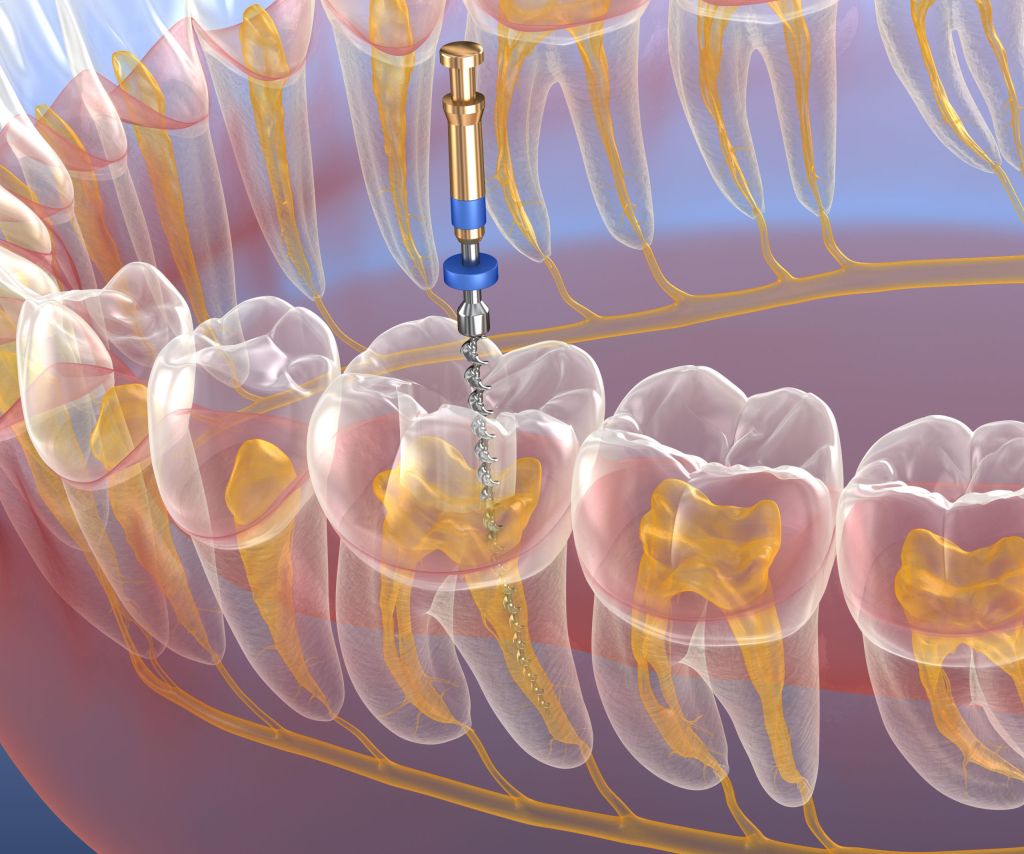
Technically known as endodontic therapy, a root canal treatment is a procedure designed to treat infection at the center of a tooth (the root canal system).
Inside every tooth, beneath the white enamel and a hard layer called dentin, is a soft tissue called pulp. This pulp contains blood vessels, nerves, and connective tissue. When this pulp becomes inflamed or infected—usually due to deep decay, repeated dental procedures on the tooth, or a crack—it can cause severe pain or an abscess.
During the treatment, we remove the inflamed or infected pulp, carefully clean and shape the inside of the root canal, then fill and seal the space. Think of it like treating the “marrow” of a bone to save the structure of the bone itself.
Who is a Candidate for Root Canal Treatment?
Not every toothache requires a root canal, but specific symptoms usually indicate that the nerve is damaged. You are likely a candidate if you are experiencing:
- Severe pain while chewing or biting.
- Pimples (fistula) on the gums.
- Chipped or cracked teeth.
- Lingering sensitivity to hot or cold, even after the sensation has been removed.
- Deep decay or darkening of the gums.
However, diagnosis is key. Before any procedure, our team uses 3D Tomography to assess the root structure accurately.
Contraindications & Alternative Pathways
We believe in honest, holistic dentistry. Root canal treatment is excellent for saving teeth, but it is not always the right path.
- Severe Structural Damage: If a tooth has fractured below the gum line or the structure is too compromised to support a restoration, a root canal will fail. In these cases, Prof. Dr. Müjde Sevimay advises that it is better to remove the hopeless tooth and place a Dental Implant. This provides a permanent, stable foundation rather than saving a tooth that will break again in a few months.
- Minor Decay: Sometimes, patients fear they need a root canal when the decay hasn’t actually reached the nerve. In these instances, we preserve the tooth’s vitality using minimally invasive Inlays Onlays or composite fillings.
The "Expert" Insight: Clinical Reality vs. Patient Fear
As a clinician, the success of a root canal isn’t just about “removing the nerve.” It comes down to the Apical Seal. We must clean the canal to the very tip of the root (the apex) without going over. Using an electronic Apex Locator is non-negotiable here; it tells us exactly where the root ends to within 0.5mm accuracy. If a dentist relies only on X-rays, they might miss hidden bacteria in the apical delta (the branching exit of the root).
Patient Concerns & Our Responses:
- “Will it hurt?” Response: With modern local anesthesia, the procedure is numb. You should feel pressure, not pain. The pain comes from the infection, which we are removing.
- “Does the tooth die?” Response: The tooth becomes “non-vital” (no sensation), but it remains a functional part of your jawbone, just like a car engine running without the sensors.
- “Will it turn black?” Response: Historically, yes. But with modern materials and proper crowning, discoloration is rare.
EXCELLENTTrustindex verifies that the original source of the review is Google. I came from abroad to get my zirconia crowns done there and I was honestly a bit nervous about getting dental treatment abroad, but I’m so glad I chose this clinic. I came here for zirconia crowns, and from the very first moment, the whole team was so welcoming and supportive. The clinic is very clean which is why I immediately felt more comfortable. A huge thank you to Sila, who was incredibly kind with me. She really made everything easier for me. I was able to overcome my fear and go through the treatment without stress. I’m very happy with the whole experience. I definitely recommend this place to anyone considering dental treatment in Turkey!Posted onTrustindex verifies that the original source of the review is Google. I visited OGN back in August wanting to change my smile my biggest insecurity I have had for my years not only did I change my smile its changed my life .. so professional clean and beautiful a big thankyou especially Daniel who went above and beyond for me can't thank you guys enough and can't wait to returnPosted onTrustindex verifies that the original source of the review is Google. I had arrived in July for 1x extraction 2x implants and 6x composite bonding being only 19 and traveling on my own the OGN team made everything as comfortable and smoothly as possible even dropping off extra Gauze pads at midnight to my hotel after I (stupidly) fell asleep on the side of my implant. All of the dentist are perfectionist and made sure I was happy before leaving. My price stayed the same and I highly recommend them to anybody that feels nervous like I did currently looking to book my 2nd visit and can’t wait to go back ⭐️⭐️⭐️⭐️⭐️Posted onTrustindex verifies that the original source of the review is Google. Güzel hizmetPosted onTrustindex verifies that the original source of the review is Google. Sıla Hanım'a çok teşekkür ediyorum randevu alırken hiç zorlanmadımPosted onTrustindex verifies that the original source of the review is Google. Diş ağrısı için arkadaşımın önerisiyle gittim, içerisi kalabalıktı çok beklerim sandım ama beni o kadar hızlı içeri aldılar ve yardımcı oldular ki ilk kez bir dişçinin böyle iyi olduğunu gördüm. Ön dişlerim için de zirkon düşünüyorum, çok hızlı fiyat ve planlama yapıldı. Randevum da çok hızlı verildi, gerçekten bu kadar yakınımda bu kadar iyi bir yer varmış haberim yokmuş, teşekkürler, ayrıca resepsiyondaki İrem Hanım'a ve klinik müdürü Nisa Hanım'a teşekkürlerPosted onTrustindex verifies that the original source of the review is Google. İlginiz için çok teşekkür ediyorum. Çalışanlarınız güler yüzlü ve oldukça samimiydi. Sıla Hanım'a özellikle teşekkür etmek istiyorum. Kendisi oldukça kibardı ve her isteğimi nazikçe yerine getirdi. ❤️ Yeniden çok teşekkür ediyorum. Bu kliniği seçtiğinizde pişman olmayacağınızı özelikle garanti ediyorum. 😌Posted onTrustindex verifies that the original source of the review is Google. Kafamdaki soru işaretlerine cevap bulduğum yerrrr.Posted onTrustindex verifies that the original source of the review is Google. Uzun zamandır güvenilir bir klinik arıyordum arkadaşımın tavsiyesiyle burayı buldum.Gerçekten personel ilgi bakımından müthiş aklımda tek bir soru işareti bile kalmadı. Doktorların ne kadar iyi olduğundan söz etmeme bile gerek yok. Tekrardan teşekkürler OGN Dental Studio
The Procedure: Your Patient Journey
At Perfect Smile Turkey, we understand that you might be traveling from the UK or Europe, so we optimize our timeline to fit your holiday schedule. A root canal usually requires 1 to 2 visits, depending on the severity of the infection.
- Diagnosis & Anesthesia: We start with X-rays to see the shape of the root canals. Local anesthesia is administered to numb the tooth and surrounding area.
- Pulpectomy: An opening is made in the crown of the tooth. We use specialized tools to remove the infected pulp.
- Cleaning & Shaping: This is the critical phase. We clean the canals using antiseptic solutions and shape them to receive the filling.
- Filling: The canals are filled with a biocompatible material called gutta-percha.
- Restoration: Because a tooth without a nerve can become brittle, a Dental Crown is almost always required afterward to protect it from fracturing.
Complementary Treatments
A root canal is rarely a standalone treatment. To ensure the longevity of the treated tooth, we often integrate:
- Post and Core: If the tooth structure is weak, we may place a fiber post inside the canal for added stability before placing the crown.
- Dental Crowns: As mentioned, capping the tooth is essential. Our Aesthetic Smile Doctor, Dr. Betül Semercioğlu, recommends Zirconia Crowns for back teeth (strength) and E-max for front teeth (esthetics).
Clinical Solution: Brands & Accreditations
Your safety is our priority. We do not compromise on materials to cut costs.
- Filling Materials: We utilize 3M Filtek and high-grade gutta-percha systems to ensure a hermetic seal.
- Crowns (Post-Treatment): We use globally recognized brands like Ivoclar E-max and Vita ceramics.
- Accreditations: Perfect Smile Turkey is proud to hold the International Health Tourism Certificate and is a member of the TDB (Turkish Dental Association). Our protocols align with international ISO standards, ensuring your treatment in Turkey meets or exceeds the quality you would expect at home.
Treatment Risks
While endodontic therapy has a high success rate (over 95%), risks include:
- Re-infection: If the coronal seal (filling/crown) leaks or if the cleaning wasn’t thorough.
- Instrument Fracture: Very rare, but tiny cleaning files can break inside curved canals.
Tooth Fracture: If the tooth is not crowned promptly after treatment
Aftercare Rules
Once the anesthesia wears off, your gums may be sore. This is normal.
- Avoid Chewing: Do not chew on the treated tooth until the permanent crown is placed.
- Oral Hygiene: Brush and floss normally.
- Medication: Take prescribed antibiotics or painkillers exactly as directed by our team.
Root Canal Cost: Why Choose Turkey?
One of the main drivers for dental tourism is the cost difference. In the UK or USA, a root canal plus a crown can cost a small fortune. In Turkey, you can receive the same high-standard treatment for significantly less.
This isn’t about “cheap” dentistry; it’s about lower operational costs in Turkey allowing us to pass savings to you.
Treatment | Avg. Cost (UK) | Avg. Cost (USA) | Perfect Smile Turkey (Approx) |
Root Canal (Molar) | £450 – £700 | $1,000 – $1,400 | £150 – £250 |
Fiber Post & Core | £150 – £250 | $300 – $500 | £80 – £120 |
Zirconia Crown | £600 – £900 | $1,500 – $2,000 | £200 – £300 |
Total Savings | ~60% – 70% | ~70% – 80% | HUGE SAVINGS |
Note: Prices are estimates. For a personalized quote, please Contact Us.
Social Media & Trends
You may have seen “Turkey Teeth” trends on TikTok or Instagram focusing on shaving down teeth. It is important to clarify: Root Canal Treatment is the opposite of aggressive cosmetic work. We are preserving your natural biology. While we love creating Hollywood Smiles, our core philosophy, supported by Dr. Wahid Kathuda, is to save natural teeth whenever possible before moving to replacements.


FREQUENTLY ASKED QUESTIONS (FAQ)
No. The procedure itself is performed under local anesthesia and is painless. The pain you feel prior to the appointment is caused by the infection, which the treatment removes.
Typically, the root canal itself takes one visit of about 60-90 minutes. However, if you need a crown (which is recommended), you should plan for a 5-7 day stay in Istanbul or Antalya to allow for the lab work.
Yes, it is generally safe to fly after a root canal. However, we recommend waiting 24 hours if possible to ensure you are comfortable and have access to our clinic if any minor adjustments are needed.
The cost of living, labor costs, and currency exchange rates in Turkey allow us to offer premium medical services at a fraction of UK/US prices. The quality of materials (like Straumann implants or 3M composites) remains the same.
Yes, for complex cases, our endodontists utilize dental microscopes to locate hidden canals and ensure a thorough cleaning.

Medically Reviewed for Prosthetic Accuracy
by Prof. Dr. Müjde Sevimay (Prosthodontics Professor)
Review Date: October 11, 2025
Additional Specialist Reviews
- Surgical review by Dr. Aslı Ataseven (Maxillofacial Surgeon) on October 9, 2025
- Alignment review by Dr. Hatice Tuçe Yeyen (Orthodontist) on October 7, 2025
Written by Selman Selim Cengiz, our Content Architect with 6+ years of experience in medical editing.
Content Last Updated on February 10, 2026.
Lorem ipsum dolor sit amet, consectetur adipiscing elit. Ut elit tellus, luctus nec ullamcorper mattis, pulvinar dapibus leo.